

The honest answer is that an EHR implementation takes as long as the organization needs to make the change safe, workable, and sustainable. A simple calendar range can be useful for setting expectations, but it becomes misleading when it hides the work that determines whether the launch will hold under real clinical and operational pressure.
Most EHR timelines include selection, build, conversion, interfaces, testing, training, and go-live. Those phases matter. They do not answer the questions that decide whether the organization is truly ready: Have leaders made the hard workflow trade-offs? Can a frontline concern reach the right decision-maker? Has the future work been tested in realistic conditions? Is there a credible way to learn and recover after launch?
The Health IT Playbook describes EHR implementation as multidisciplinary work that includes workflow redesign and staff training, not simply a technology deployment. For executive teams, the practical implication is clear: the schedule should show when the organization will establish and test the operating conditions around the system.
Start with a planning range, then earn confidence in it
Search results commonly offer a broad answer: smaller organizations may complete a transition in months, while larger hospitals and multi-site systems can require a year or longer. That range is directionally useful. It is not a promise, a benchmark, or a reason to force an organization through gates it has not passed.
A credible EHR timeline accounts for the scale of the clinical footprint, the number of locations and specialties, the complexity of interfaces and data conversion, the degree of workflow change, the availability of subject-matter experts, and the number of enterprise decisions still open. It also accounts for the leadership capacity required to resolve trade-offs without making teams wait for the next standing meeting.
That distinction protects both momentum and trust. Leaders can adjust a schedule when evidence changes. It is much harder to recover confidence when the organization declares readiness because the calendar demands it, then asks frontline teams to absorb the unresolved work.
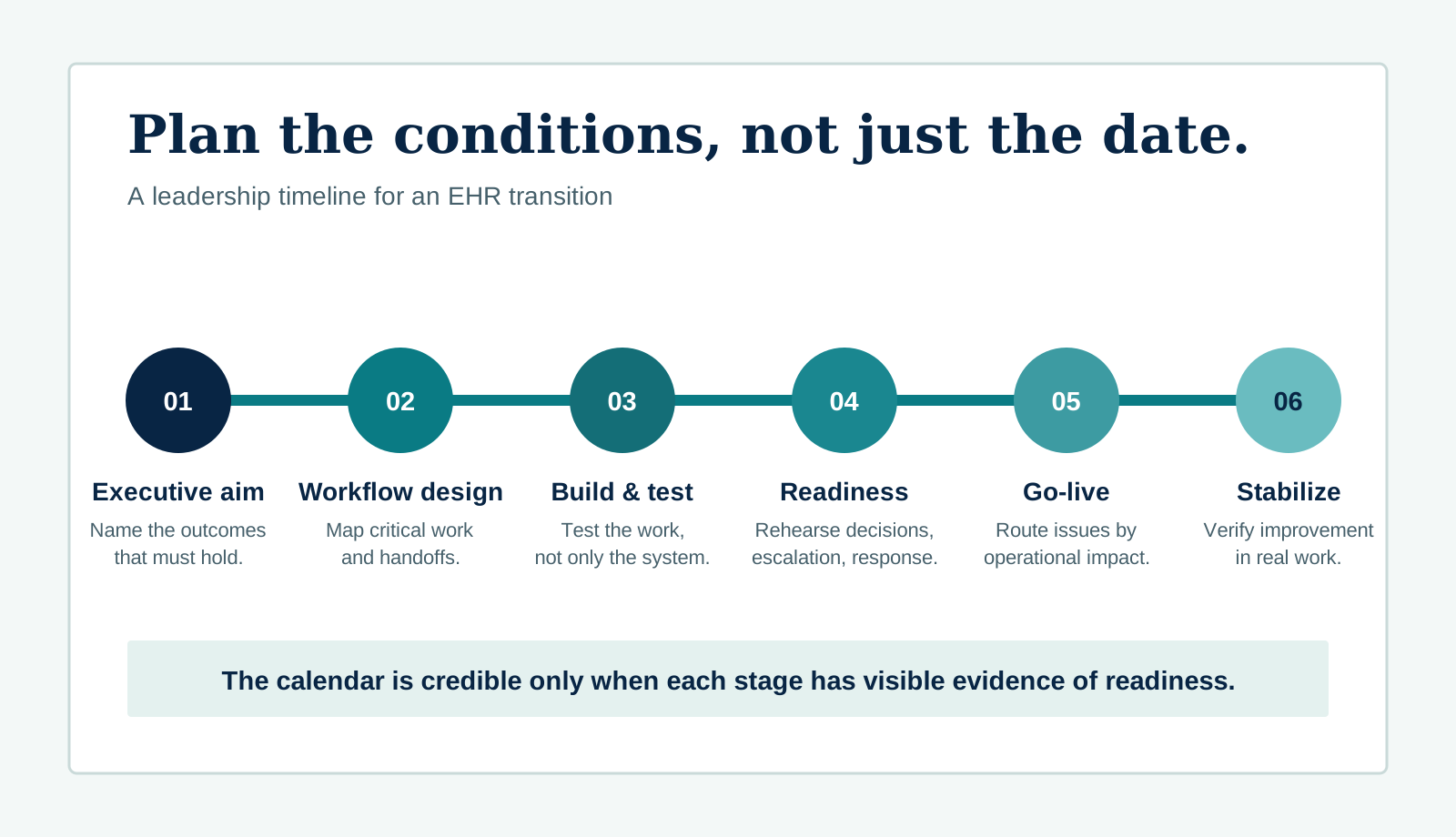
What actually changes the EHR implementation timeline?
Three organizations can buy the same platform and have very different timelines because the technology is only one part of the change. The timetable expands or contracts according to the conditions around the work.
Clinical and operational scope
A single site with a limited set of standard workflows faces a different planning problem than a health system coordinating hospitals, clinics, specialties, shared services, and affiliate practices. The question is not merely how many users need access. It is how many high-consequence workflows must keep moving across settings, shifts, and handoffs.
Workflow redesign
An EHR changes the physical and mental tasks people complete, the information they receive, and the handoffs that connect their work. The Agency for Healthcare Research and Quality workflow toolkit emphasizes that health IT affects both clinical and administrative workflow. A timeline that treats workflow review as a one-time documentation exercise will underestimate the work of testing and refining the future state.
Decision velocity
Some delays are technical. Many are decision delays wearing a technical label. A build team may need a policy choice, a clinical standard, a cross-site agreement, or a clear exception rule before it can proceed. If authority is unclear or an issue moves through several forums without a final answer, days accumulate quietly until a later phase absorbs the pressure.
Readiness for the exception, not just the happy path
Every organization can demonstrate a standard workflow on a quiet day. The harder work is designing for incomplete information, delayed results, capacity constraints, staff absence, competing urgent issues, and local conditions that do not match the ideal process. The more closely leaders test those conditions before launch, the more trustworthy the timeline becomes.
Phase 1: Establish the executive aim and decision model
The first phase begins before detailed workstreams take over. Executive sponsors need to define what the organization is protecting through the change: continuity of care, safe high-risk workflows, dependable escalation, clear decision ownership, useful visibility, and a recovery rhythm that supports staff after launch.
“A successful go-live” is too vague to guide an enterprise trade-off. Define the outcomes that must hold when the work gets uneven. Then make the decision model visible: which decisions remain local, which require cross-functional review, who can make an enterprise call, and how an urgent concern reaches that authority.
This is where an organization can use its go-live readiness work to align the leadership system around the implementation, rather than creating another reporting layer. The point is not to centralize every decision. It is to prevent critical choices from having no reliable route.
- Name the executive sponsor for enterprise trade-offs.
- Identify the critical workflows that cannot fail quietly.
- Set response expectations for clinical, operational, technical, and policy issues.
- Define what evidence is required to close a significant issue.
A timeline should not move beyond this phase while leaders are still debating who decides what. That uncertainty will simply reappear later as build rework, training confusion, or a command center overwhelmed by questions it was never designed to resolve.
Phase 2: Design the future workflow with the people who do it
Workflow design is more than mapping clicks in the EHR. It is a practical review of how orders, information, judgment, responsibility, and communication move through the work. The best designs identify the points where a patient-care process can stall, where a handoff depends on informal knowledge, and where a new system could create a false sense of completion.
Bring together clinicians, operational leaders, informatics, IT, registration, ancillary departments, and the managers who must carry the change across shifts. Map the current work and the intended future state, then call out the exceptions. Ask what happens when the expected sequence cannot be followed, when a result is late, when a patient moves units, or when the team must act before a routine meeting can occur.
The AHRQ definition of workflow includes the physical and mental tasks performed within and between work environments. That matters because an EHR implementation changes not only screens and forms, but also how people understand what they are responsible for next.
The phase is ready to advance when leaders can show that the most consequential workflows have owners, known dependencies, and a clear process for resolving disagreements before they become build or training problems.
Phase 3: Build, convert, and test the operating work
Configuration, integrations, conversion, security, and technical testing are essential. Executive teams should treat them as part of a larger readiness question: can the organization perform the work safely and consistently when the system is live?
Test scenarios should include end-to-end clinical and operational workflows, not just isolated functions. Include real roles, realistic constraints, and the exceptions that tend to expose weak handoffs. A workflow that works only when every person is available and every input arrives on time is not ready for an operating environment.
Look for practical evidence: Are users hesitating at a predictable point? Are workarounds already forming? Are teams turning to phone calls or private spreadsheets because the intended communication path is unclear? Is the same question surfacing across units? These signals may point to workflow design, decision rights, staffing, or escalation discipline. More training is not a universal answer.
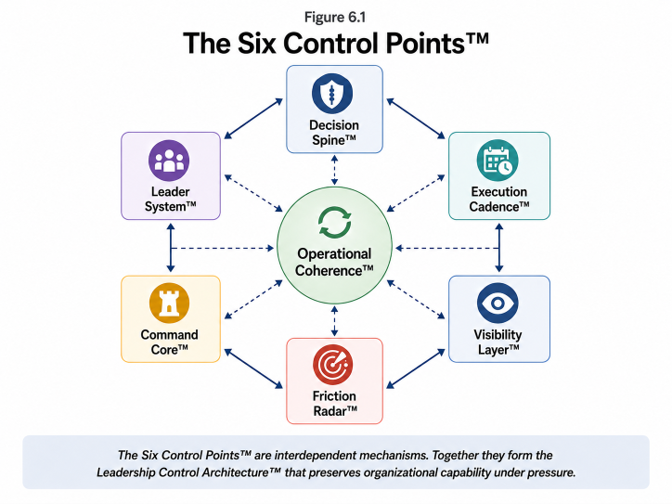
Leaders who need a deeper way to check the conditions around those signals can review the six control points of operational coherence. The goal is to distinguish a normal learning curve from a pattern that will compound under pressure.
Phase 4: Use decision gates before declaring readiness
Decision gates stop a schedule from becoming a source of false confidence. They require the program to show evidence that the organization can safely enter the next stage. The gate is not a bureaucratic checkpoint; it is a disciplined conversation about whether the operating risks are understood and owned.
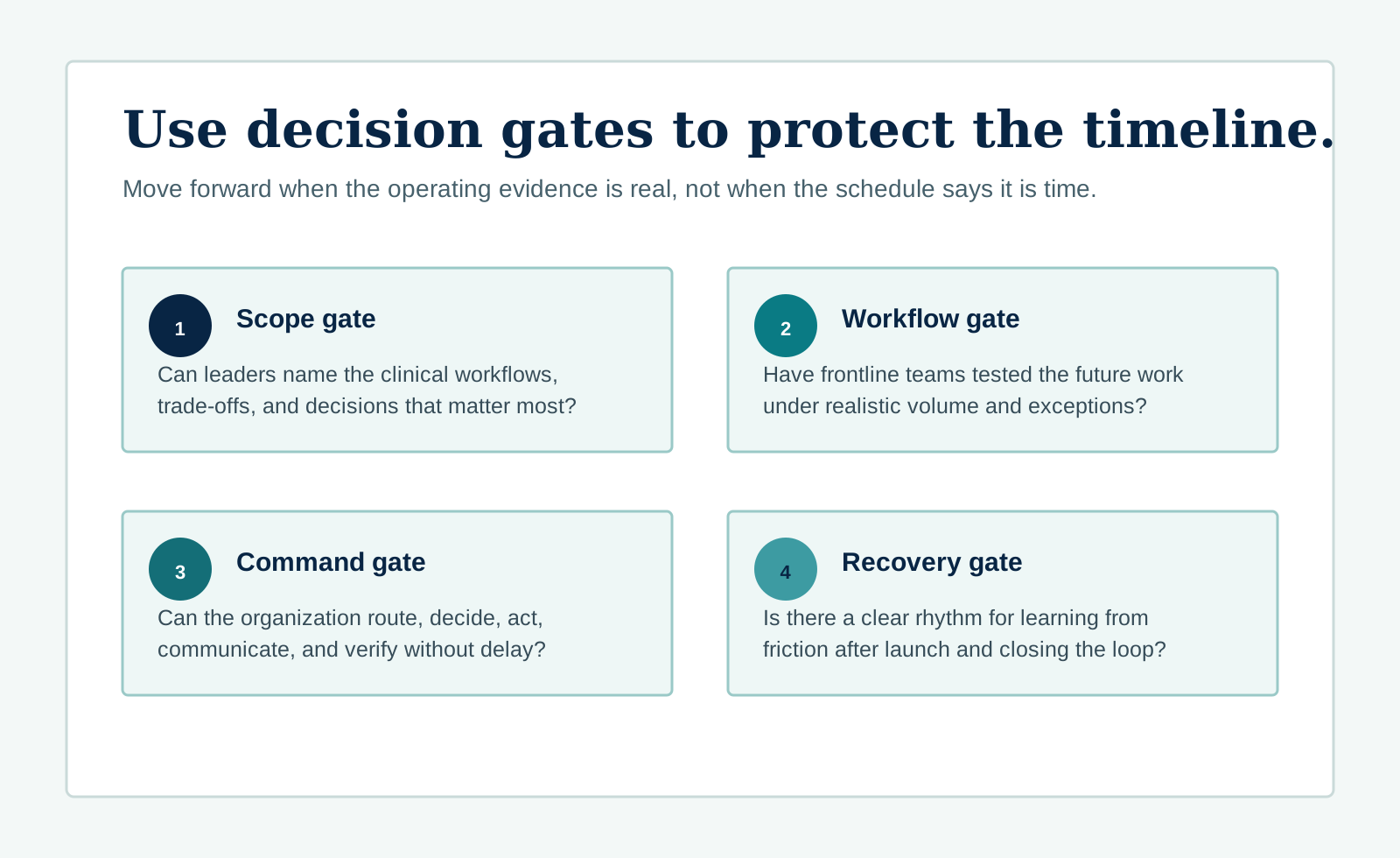
At the scope gate, ask whether leaders agree on the workflows, trade-offs, and outcomes that matter most. At the workflow gate, ask whether frontline teams have tested the future work under realistic conditions. At the command gate, ask whether a concern can be routed, decided, acted on, communicated, and verified. At the recovery gate, ask whether the organization knows how it will listen for friction and close the loop after launch.
When a gate is not passed, the choice is not automatically “delay.” Leadership may be able to narrow scope, add support, clarify an authority, sequence work differently, or protect a high-risk workflow with a temporary operating rule. The important part is making that choice deliberately rather than allowing the unresolved condition to travel forward unnoticed.
Phase 5: Treat go-live as the beginning of adaptation
Go-live is the point at which the design meets the real operating environment. Staff workloads, patient flow, local practices, competing priorities, and imperfect information will expose conditions that no project plan can fully predict. The command center therefore needs more than a queue of tickets. It needs a way to separate immediate support needs from issues that require workflow redesign, policy interpretation, technical correction, or executive coordination.
Use a simple closed-loop rhythm: capture the signal with enough context to understand its impact, route it to the right decision-maker, assign the action, communicate the outcome, and verify that the affected work improved. A task can be technically complete while clinicians are still working around the problem. Verification is what turns activity into recovery.
This is also where Go-Live Readiness becomes a distinct leadership need. Implementation, training, and IT teams can do excellent work while the organization still needs help keeping decisions, escalation, and operating visibility connected across functions.
Phase 6: Plan the first 90 days before the launch date
Post-go-live stabilization should be planned before the first user signs in. The early period is when leaders learn whether the command rhythm, escalation rules, and workflow assumptions can hold across the organization.
- Days 1-14: protect patient safety, support the highest-risk workflows, and make daily issue decisions visible.
- Days 15-30: identify repeat friction, reduce rework, and show teams what changed because they surfaced a concern.
- Days 31-60: compare experiences across units and leadership levels instead of relying only on enterprise averages.
- Days 61-90: decide which issues are temporary adaptation, which require redesign, and which operating disciplines should remain permanent.
A strong review asks more than whether the issue count is declining. It asks whether decisions are moving more clearly, whether frontline teams can see that concerns are resolved, whether high-risk workflows are becoming more reliable, and whether leaders have a shared view of conditions. Those are the signals that distinguish a busy launch from a stabilizing organization.
For a practical companion, use the EHR implementation checklist for healthcare leaders to test governance, workflow, command-center, and recovery readiness in more detail.
How Stability Edge Helps
Make the go-live date a leadership commitment, not a leap of faith.
Stability Edge works alongside implementation, project, training, and change teams to strengthen the leadership architecture around an EHR transition: decision pathways, escalation discipline, operational visibility, command-center rhythm, and the recovery practices that help the organization adapt after launch.
Book an Executive BriefingFrequently Asked Questions
EHR implementation timelines
How long does a hospital EHR implementation take?
There is no responsible universal timeline. A large hospital or health system must plan for the time required to make workflow, integration, data, training, governance, and readiness decisions visible and testable. The useful question is whether each stage has credible evidence that the organization can safely move forward.
What usually delays an EHR implementation?
Delays often arise when critical workflow decisions remain unresolved, interfaces or data dependencies are discovered late, training is disconnected from real work, or the organization cannot route cross-functional trade-offs quickly. A date rarely fixes those conditions; clear ownership and decision gates do.
When should go-live readiness start?
Readiness work should begin while the implementation is being designed, not in the final weeks. Leaders need time to define decision rights, test high-risk workflows, rehearse escalation, and establish how they will learn from friction after launch.
Is go-live the end of an EHR implementation?
No. Go-live begins the period when the new system meets real patient-care work, uneven staffing, competing priorities, and exceptions. The first weeks after launch should have a defined leadership rhythm for resolving issues and verifying that conditions improve.
Related Posts
 EHR Implementation Checklist for Healthcare Leaders
 Six Operational Coherence™ Control Points