Decisions close more reliably
The right owner can make the call, and the decision returns clearly to the teams carrying the work.
 Talk with MarkGet a Free 30-Minute Assessment Call
How Stability Edge Works
Operational Coherence™ is the ability to maintain coordinated, reliable, and adaptive enterprise performance under sustained pressure. It is the outcome leaders need when EHR go-lives, AI-enabled workflow change, or enterprise transformation put the organization under load.
Leadership Control Architecture™ is the mechanism: the practical leadership controls that keep authority, operating rhythm, visibility, friction detection, escalation, and leader capacity connected while the work is changing.
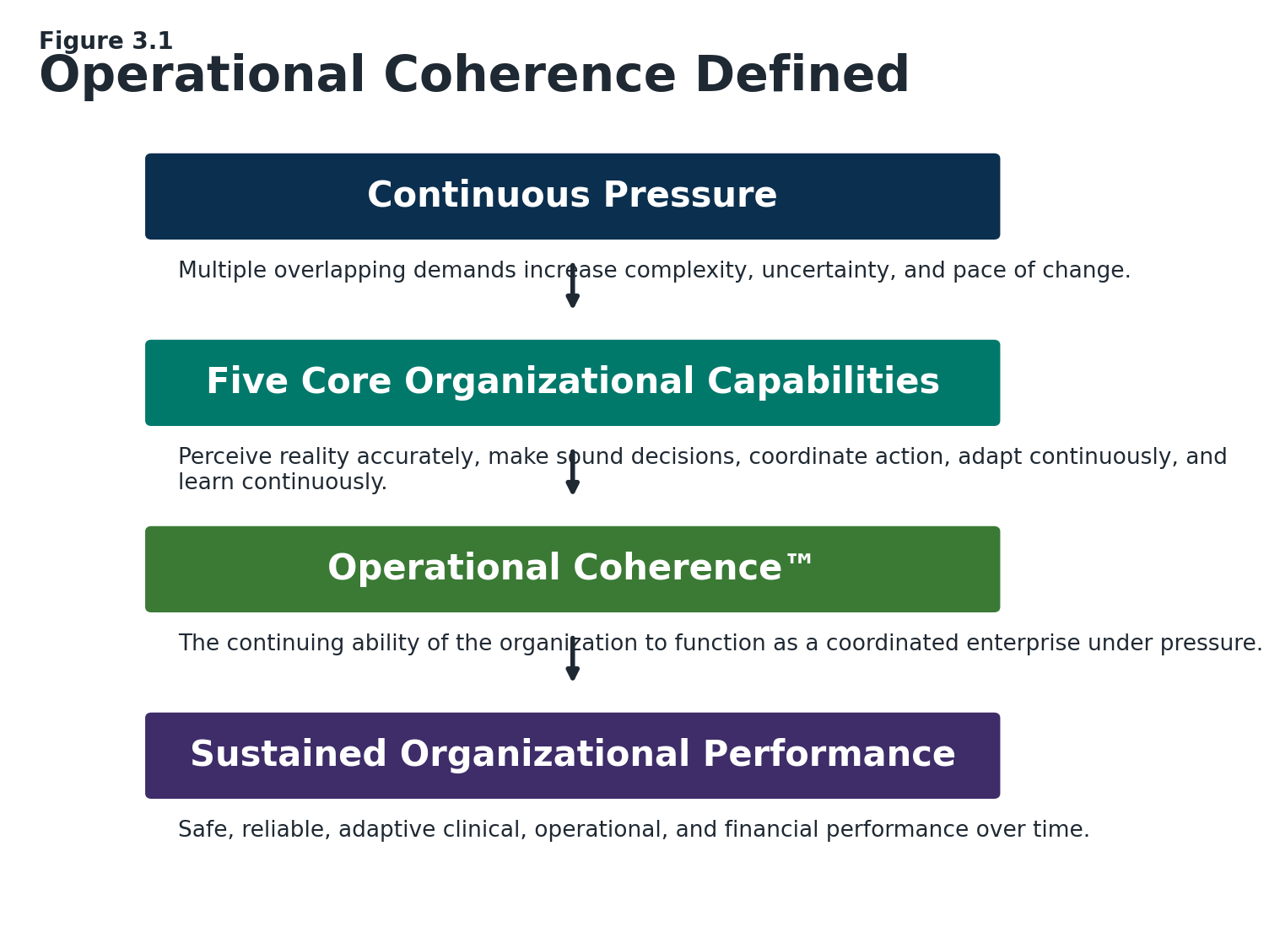
Outcome And Mechanism
Operational Coherence™ shows up in observable working conditions: decisions close more reliably, escalations stop recirculating, operational reality surfaces earlier, people are more willing to tell the truth, lessons improve the next cycle, and functions act together more consistently.
Leadership Control Architecture™ clarifies who decides, how issues escalate, what leaders need to see, how priorities stay coordinated, and how the organization learns while conditions change.
What Better Looks Like
These are the practical signals that Leadership Control Architecture™ is helping the organization respond with more clarity, truth, learning, and cross-functional consistency.
The right owner can make the call, and the decision returns clearly to the teams carrying the work.
Issues reach the right forum with the evidence needed for a durable response instead of returning unchanged.
Leaders see recurring friction, hidden burden, and emerging risk before they become a reporting surprise.
Teams can raise concerns and constraints without waiting for the condition to become impossible to ignore.
The organization carries evidence, decisions, and adjustments forward instead of rebuilding the same response each time.
Clinical, operational, digital, and executive leaders can work from a connected response rather than separate workarounds.
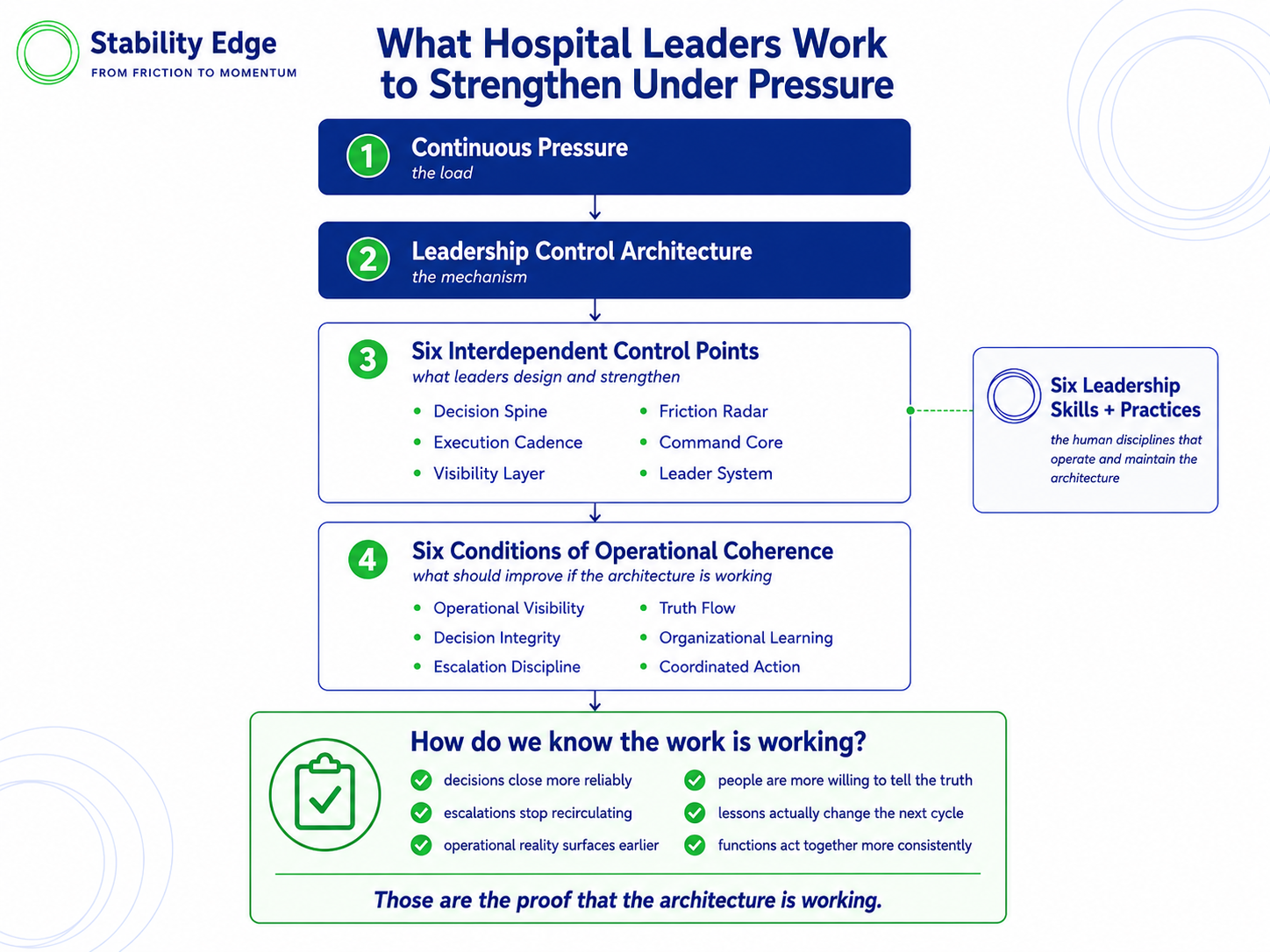
Practical Guide
Operational Coherence™ is not another program to run. It is the leadership infrastructure that helps those priorities move through one coordinated decision and execution system.
Read the practical guide to applying Operational Coherence™The Six Control Points
Each Control Point has a practical role and an observable signal when that role is breaking down.
What it does: Defines who has authority to make consequential decisions and how those decisions move to closure.
Failure signal: Critical issues wait because ownership, authority, or the decision deadline is unclear.
What it does: Creates the leadership rhythm that turns priorities into commitments, follow-through, and review.
Failure signal: Meetings multiply, but actions are not revisited or closed.
What it does: Connects executive reporting to the operating signals leaders need to understand what is happening in the work.
Failure signal: Dashboards look stable while frontline conditions, workarounds, or delays are worsening.
What it does: Surfaces recurring obstacles, unfinished work, and cross-functional strain early enough to address them.
Failure signal: The same problems recur through different channels until they become an executive escalation.
What it does: Establishes the forums, escalation routes, and response discipline that convert signals into coordinated action.
Failure signal: Issues are escalated repeatedly without a clear decision, owner, or documented closure.
What it does: Protects the leadership capacity, role clarity, and support required to sustain coordinated action through change.
Failure signal: Leaders spend more time reacting to fragmented demands and less time seeing the whole system.
Three-Step Method
Bring leadership experience and operating evidence together to identify the pressure pattern, the Control Points under strain, and the decisions that cannot wait.
Clarify authority, establish the right operating rhythm, improve the signal path, and reset the escalation or follow-through discipline the condition requires.
Return to the evidence, review whether conditions are improving in the work, and adjust the response before strain becomes normalized.
Experience And Operating Evidence
The OCI Assessment provides deep diagnostic evidence across the Six Control Points. Stability Architecture Advisory™ uses that evidence, alongside local operating conditions, to direct the next executive move.
See the OCI Assessment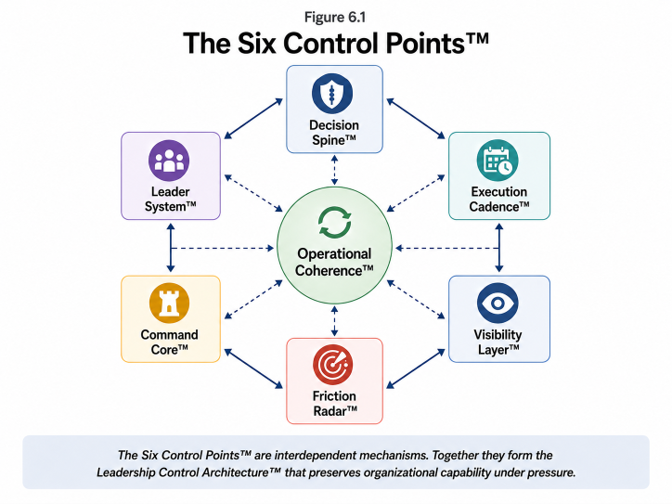
Typical Engagement Range
Typical engagements range from $28,000 to $68,000, depending on the pressure point, participating leaders, evidence needed, and duration of the work. The assessment call clarifies the appropriate scope before a formal proposal.
Executive Briefing
In a focused 30-minute conversation, we will clarify the pressure point, identify the most useful next step, and determine whether Stability Edge is the right fit.