Decision architecture
Identify the recurring EHR decisions that need clear authority, the evidence required to make them, and the route for returning a usable answer to the people affected.
 Talk with MarkGet a Free 30-Minute Assessment Call
EHR Implementation Consulting
Stability Edge helps health system leaders create the decision, escalation, and operating conditions that keep an EHR implementation connected to the work it is meant to improve.

The Work Around The Build
An EHR implementation changes the practical agreements that hold care delivery together. It affects how information moves, who owns an exception, where a delay becomes a risk, what managers need to know, and which tradeoffs require enterprise authority.
Those questions often become visible only after plans, workstreams, and status reports are already in motion. The build may be progressing. Training may be scheduled. Yet the people closest to the work may still be unsure where to raise a concern, who can settle a cross-functional decision, or how a decision will return to the units carrying the change.
Stability Edge works with executive sponsors and accountable leaders to make that operating response explicit. The goal is not to add another implementation layer. It is to give the existing teams a more dependable way to coordinate the difficult work that sits between a project plan and day-to-day adoption.
Decisions are circulatingThe same implementation question moves between meetings because the required authority, evidence, or deadline is unclear.
Readiness looks stronger than it feelsReports show activity, but managers and frontline teams are still carrying unresolved handoffs, exceptions, or competing direction.
Local workarounds are taking holdCapable teams find ways to keep work moving, but the variation hides the cross-functional issue leaders need to resolve.
What This Work Strengthens
Stability Edge focuses on the conditions that let implementation, clinical, operational, and technology teams act from the same practical understanding when the work becomes more complex than the plan anticipated.
Identify the recurring EHR decisions that need clear authority, the evidence required to make them, and the route for returning a usable answer to the people affected.
Separate normal implementation adjustment from the issues that need cross-functional or executive attention, so important risks do not disappear into more reporting.
Create a focused view of the signals, unresolved work, commitments, and friction leaders need to see in order to direct the next phase with confidence.
Establish a short review rhythm that connects decisions to owners, actions, verification, and direct feedback from the teams carrying the implementation.
From Implementation Plan To Operating Plan
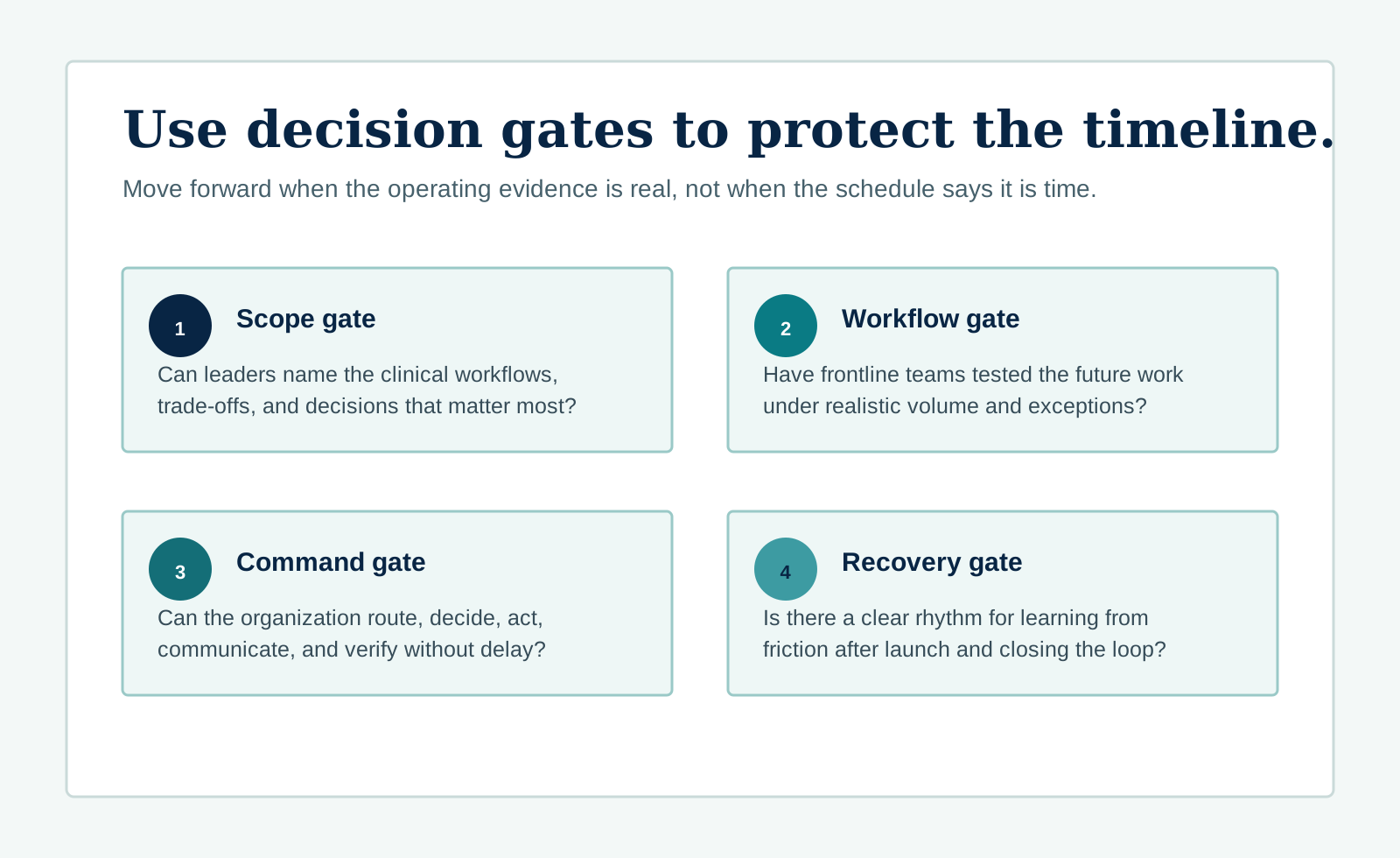
Every implementation plan has milestones. The operating plan answers a different set of questions: Which decisions must be made before the next phase? Who has the authority to settle the issue? What evidence should change the decision? Where does an unresolved concern go? How will leaders know whether the response reduced the burden in the work?
When those answers remain implicit, implementation teams absorb the ambiguity. Meetings multiply, exceptions move through informal channels, and a manager may receive different direction depending on who is asked. The issue is not a lack of commitment. It is that the leadership architecture has not yet made the path through the work clear enough.
Stability Edge helps leaders define that path in a way that respects the teams already doing the delivery work. The resulting structure makes it easier to recognize a recurring issue, bring it to the right decision maker, document the next move, and verify that the answer is working in practice.

Founder-Led Advisory
Mark C. Medlin brings more than 35 years in transformation, organizational development, and improvement, including more than 20 years in healthcare settings. His work spans health systems, clinical improvement, enterprise technology delivery, workforce capability, and organizational change.
Since 2022, he has worked directly with more than 1,000 healthcare leaders in facilitated consulting and working sessions. Post-session evaluations consistently show 4.5 to 5.0 out of 5 for recommendation and practical application, with an average effectiveness score of 4.75 out of 5.
He developed the Operational Coherence Index™ to help leaders see where decision flow, visibility, escalation, coordination, and capacity are helping or hindering a transformation. That perspective matters when an EHR implementation reaches across the clinical, operational, technical, and leadership boundaries that must hold together.
Meet Mark C. MedlinHow The Engagement Begins
The work is built around a live EHR implementation, the outcome leaders need to protect, and the places where the organization needs more clarity before strain becomes normal.
Clarify the phase of the implementation, the affected work, the executive concern, and the decisions, handoffs, or feedback gaps creating the greatest risk.
Define the decisions, authority, escalation boundaries, operating signals, and review rhythm that give leaders a practical way to respond across functions.
Use direct leadership input and operating evidence to see whether the response is reducing repeated friction, clarifying accountability, and making the implementation easier to carry.
What Leaders Leave With
The outputs fit the implementation in front of the organization, while making it easier for leaders to move from a signal in the work to a clear, accountable response.
A Focused Fit
This work is a fit for health system leaders managing a complex EHR implementation with capable delivery teams already in place. It is especially useful when the organization needs a clearer way to make cross-functional tradeoffs, respond to frontline friction, or keep decisions and follow-through connected across workstreams.
For an upcoming activation, Go-Live Readiness provides a more focused readiness engagement. When active launch strain is already disrupting the work, EHR Go-Live Support and a Stabilization Reset offer a more immediate starting point.
Explore Healthcare Change Management Consulting30-Minute Executive Briefing
Bring the phase of work, the pressure point, and the outcome leaders need to protect. Leave with a practical view of the next useful step.
Stability Edge helps the leaders carrying an EHR implementation establish the decision, escalation, visibility, and follow-through conditions that let the work hold together across clinical, operational, technology, and executive teams.
No. Implementation partners, project leaders, informatics teams, trainers, and change leaders are essential. Stability Edge complements their work by strengthening the executive operating structure that helps cross-functional decisions move, recurring friction surface, and accountability remain visible.
The strongest starting point is before major design, readiness, and go-live decisions begin to converge. The work can also help during an active implementation when the same decisions keep returning, leaders are receiving competing signals, or teams are creating local workarounds.
The outputs are tailored to the implementation, but typically include a view of the operating condition, named decision ownership, escalation routes, an executive review rhythm, and priorities for the next phase of work.
Implementation consulting can begin earlier, when the leadership conditions around the work still need to be designed. Go-Live Readiness is the focused next step when activation is approaching and leaders need to test whether the operating response will hold under launch pressure.