Where the Partner's Mandate Ends
A healthcare system spends eighteen months preparing for a major go-live. The implementation partner configures the platform. The internal team drives adoption. Training rooms fill. Dashboards turn green on launch day. Everyone exhales. Then, three weeks later, the floor quietly starts to fracture, and no one can name why.
Thirty-five years inside complex organizations has shown me the same sequence across Epic deployments, Oracle rollouts, and major system changes of every kind. The technology works. The people worked hard. And the launch still loses ground. That contradiction points to something most planning never accounts for.
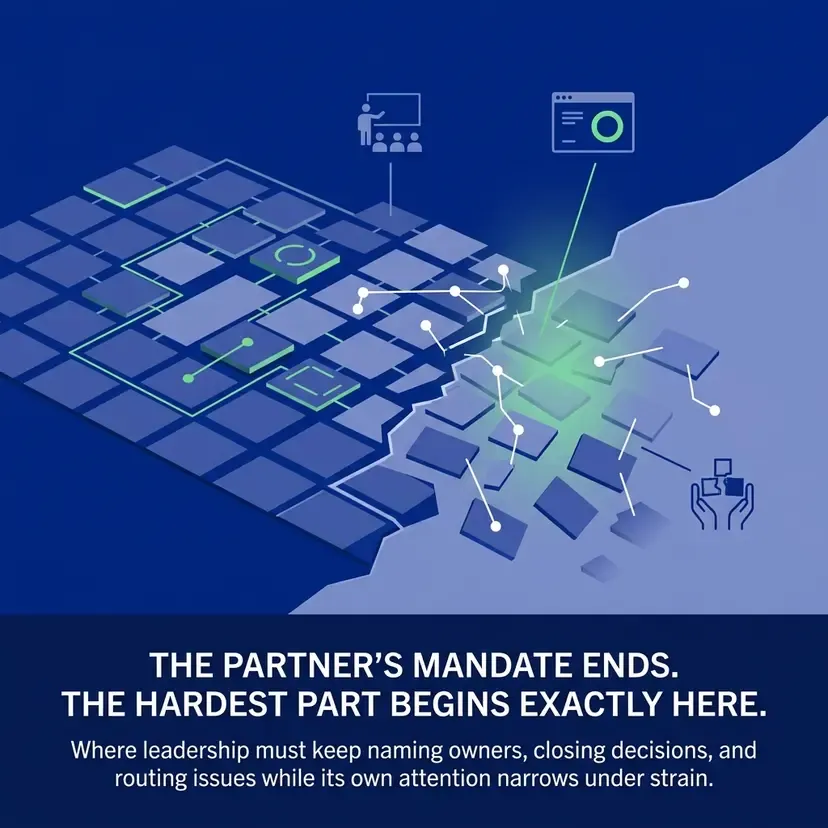
An implementation partner carries a specific, contracted scope. They build the configuration, migrate the data, run testing cycles, and stand up training. Their mandate ends at the point where the technology functions as designed. That is an honest boundary, and good partners hit it well.
The hardest part of a launch begins just past that edge. It is the stretch where a leadership team must keep naming owners, closing decisions, and routing issues cleanly while its own attention narrows under strain. The scope you buy from a partner quietly defines the scope you must supply yourself. Most organizations never notice they signed up for the second half.
The Thing Everyone Measures, and the Thing That Decides the Outcome
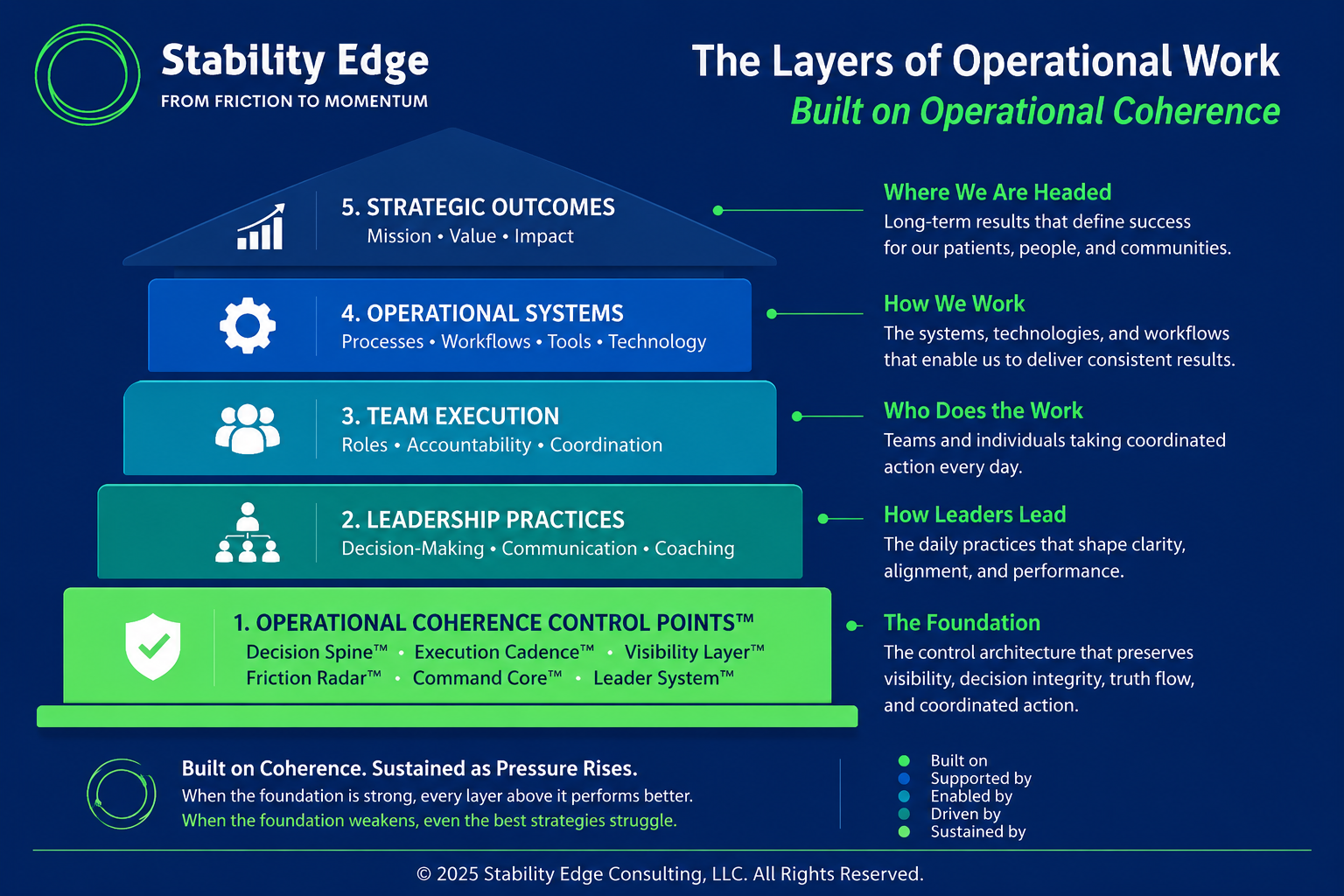
Project plans measure configuration completeness, training hours, testing progress, and adoption rates. Those numbers matter, and they often turn green on schedule. They do not answer the harder question: can the leadership team keep making clean decisions when the days get hardest?
The technology rarely fails in isolation. People, processes, and the decisions that coordinate them can break first. That is the gap between what gets measured and what determines the result.
Call it decision endurance: the capacity of a leadership group to keep truth flowing and keep closing decisions after launch adrenaline fades and the productivity pressure arrives. Pressure does not create weak leadership architecture. It exposes whatever was already thin.
What Pressure Removes First
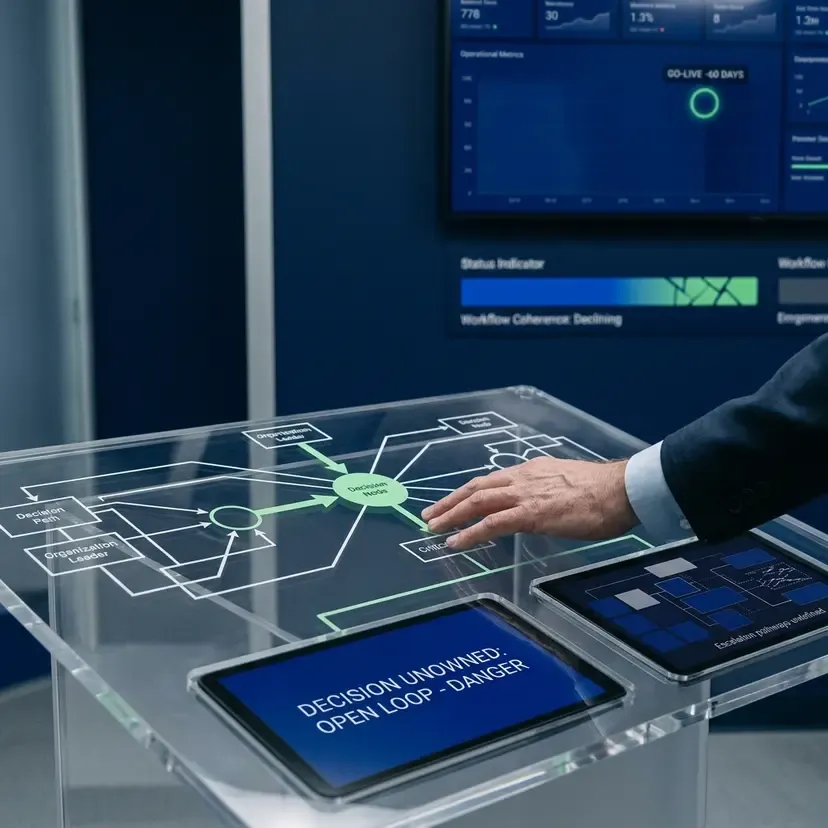
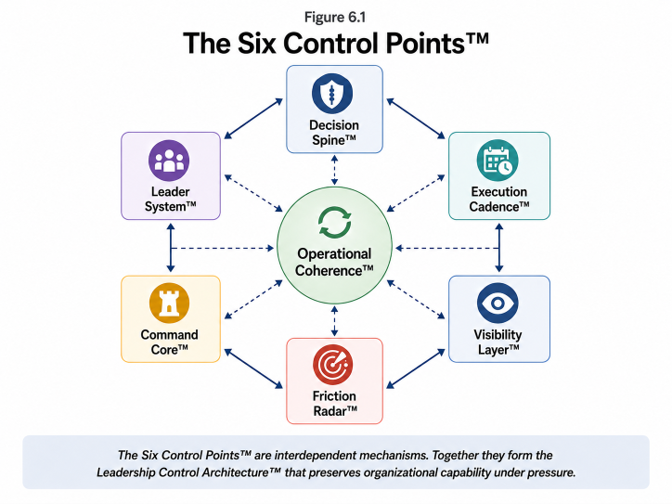
The honest way to stress-test any system is to ask what disappears first when the load climbs. In a go-live, the first thing to go is coordinated decision-making. Escalation paths that felt clear in the planning room turn ambiguous under real volume. Issues surface with no assigned owner. Executives step in personally to unstick each jam, one at a time.
That executive intervention looks like leadership. It is actually a signal that the architecture underneath has thinned. When heroics become the primary way decisions close, the system is carrying more than its structure was built to hold. Leaders work harder and faster to push through, but raw effort is a different thing from a team holding its decisions together.
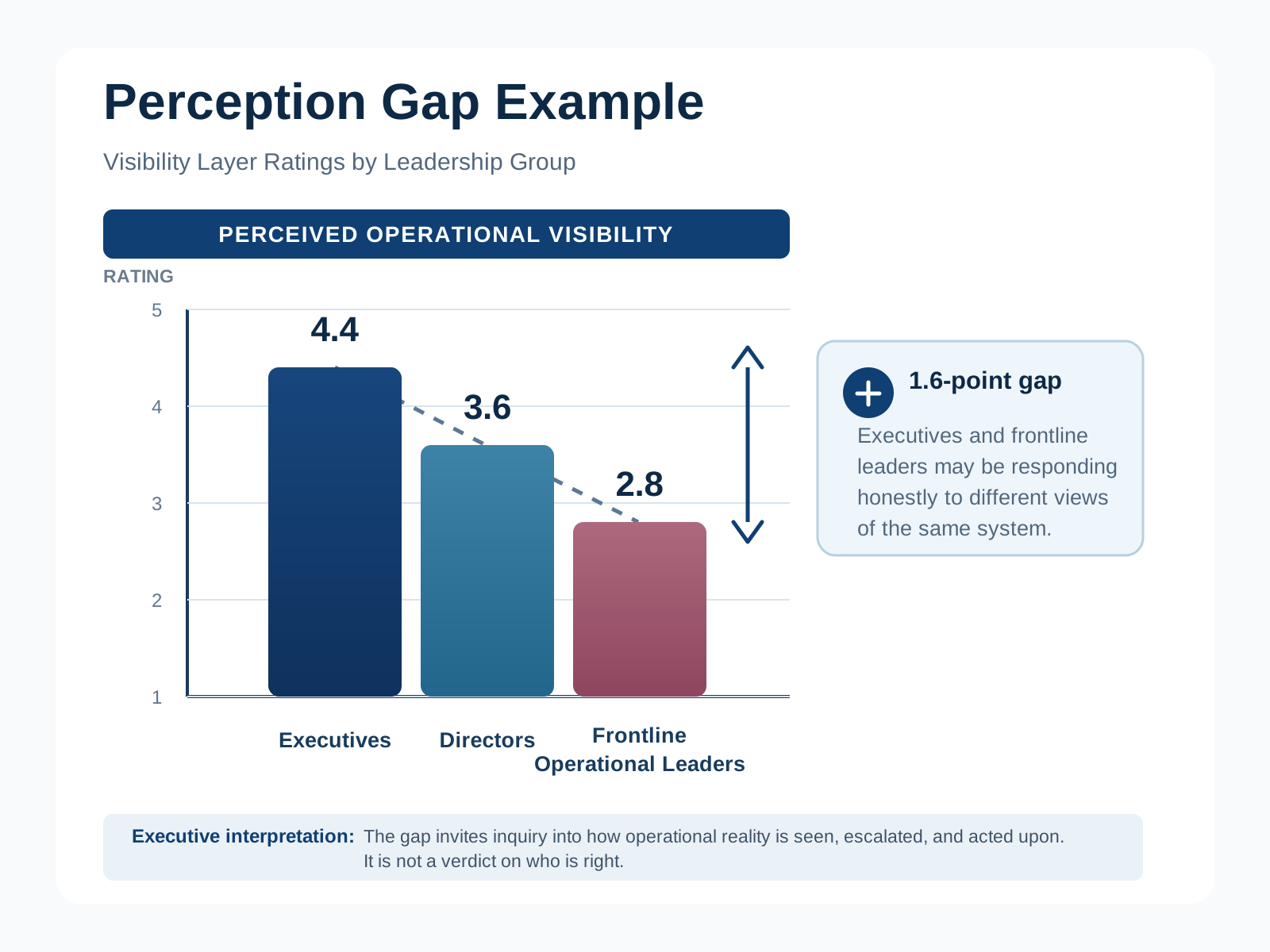
Leadership misalignment compounds the strain. When executives do not share the same picture of the project, that disconnection flows downward to project managers and the clinical floor. The floor reads hesitation long before any dashboard registers it.
Responsibility That Silently Changes Hands
Trace a live go-live issue and watch where responsibility quietly moves. The partner owns the fix until the technology works as configured. After that, ownership transfers to the internal team. But the seam between those two zones rarely has a named catcher.
Issues that live in the seam, including workflow gaps, cross-department decisions, and judgment calls under pressure, fall to whoever happens to be looking. This is the load-bearing wall that most go-live plans forget to draw.
The building looks finished. The wiring works. And the wall that holds coordination together during the hardest weeks was never specified in any blueprint. It gets improvised in real time by tired people making individual calls.
Building the Half You Have to Supply
The reframe is straightforward once you see it. Durability is a property of your leadership team's decision-making, not of the platform's configuration. A strong partner and well-trained users get you to a working system. Holding that system together in the pressured days after launch is work you have to supply yourself, and it deserves the same rigor you brought to procurement.
That means naming decision owners before the pressure arrives, not during it. It means defining escalation paths that survive contact with real volume. It means treating workarounds and silence on the floor as intelligence, because operational reality reaches the clinical space long before it reaches executive reporting.
None of this replaces the technical work. It sits alongside it, in the layer that governs how decisions close and how truth flows under continuous load. Building that muscle ahead of the launch changes what the hardest weeks feel like.
Key Takeaways
What to watch before launch
- A working platform is not the same thing as a durable launch.
- The leadership work begins where the implementation partner's technical scope ends.
- Decision endurance determines whether truth keeps flowing and issues keep closing after launch pressure rises.
- Heroic executive intervention is a warning sign that the underlying decision architecture is too thin.
- The handoff from technical scope to internal leadership ownership needs a named design.
- Technical readiness and leadership readiness must be built alongside one another before launch.
How Stability Edge Helps
Build the leadership half before pressure arrives.
Go-Live Readiness helps healthcare leadership teams clarify decision ownership, escalation discipline, command rhythm, and executive visibility before the hard weeks make those gaps expensive.
Explore Go-Live ReadinessBook an Executive BriefingFrequently Asked Questions
Questions leaders ask about this topic
What should an implementation partner own during an EHR go-live?
A partner's scope commonly includes configuration, data migration, testing, training support, and the technical work needed to make the platform function as designed. The internal leadership team still needs a clear operating structure for cross-functional decisions, escalation, and post-launch coordination.
Why can a go-live struggle after the technology is working?
A working platform does not automatically create clear ownership, shared situational awareness, or fast decision closure. Once launch pressure rises, gaps in those leadership disciplines can become the source of repeated workarounds, stalled issues, and uneven recovery.
What is decision endurance?
Decision endurance is the leadership team's capacity to keep truth flowing, make clear decisions, and maintain ownership under sustained pressure. It is the capability that keeps a launch coordinated after early attention, external support, and launch-day energy begin to recede.
How can leadership prepare for the post-launch handoff?
Before go-live, name who owns cross-functional decisions, define escalation paths and response expectations, agree on the signals leaders need to see, and rehearse how the team will close issues when volume is high. The goal is to avoid making the operating system up in real time.