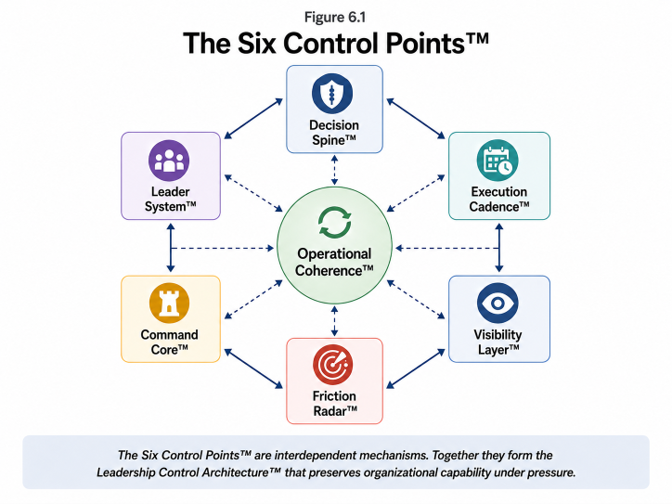
Operational coherence is built through connected leadership controls
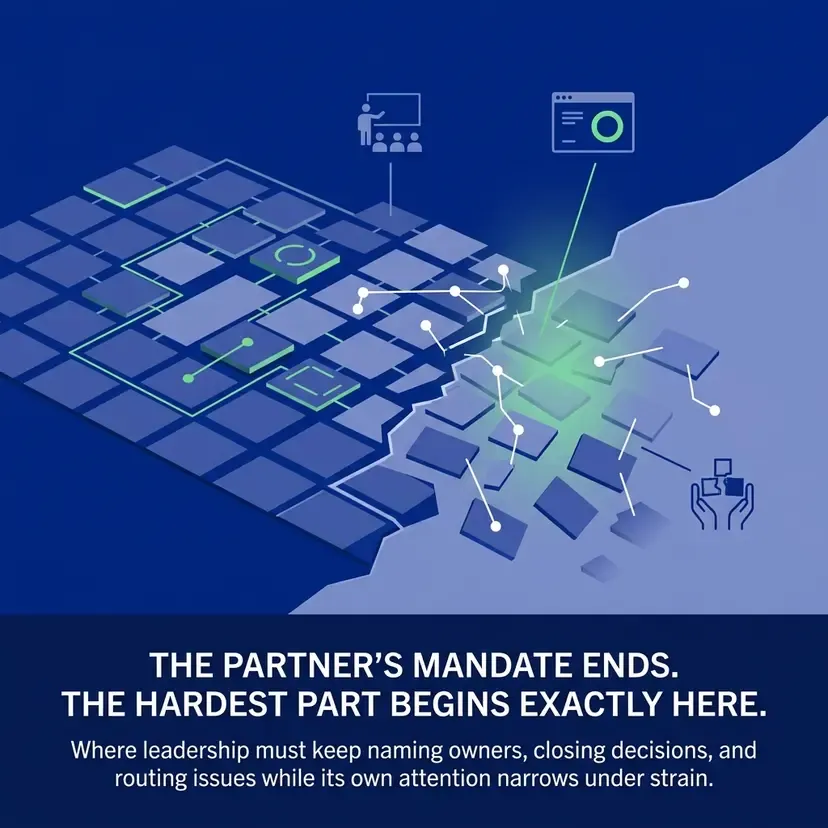
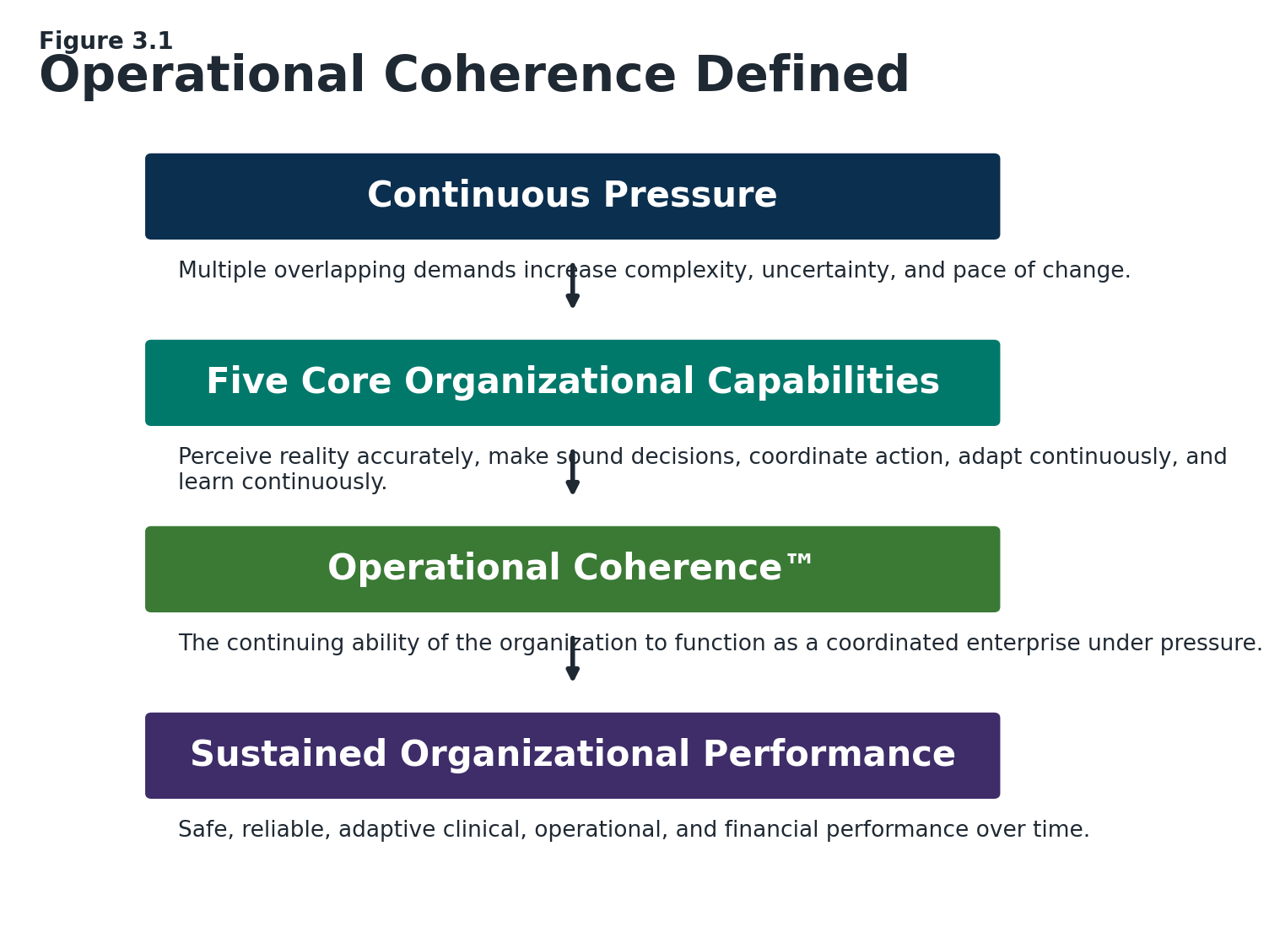
Healthcare organizations do not lose coherence because people stop caring or because one meeting goes badly. Coherence weakens when the leadership controls around the work stop reinforcing one another: decisions are unclear, operating cadence drifts, signals arrive late, friction is normalized, cross-functional leadership fragments, or leaders lack the capacity and discipline to sustain the response.
The six control points are Stability Edge’s integrative framework for seeing and strengthening those conditions. They are not a new layer of bureaucracy. Together, they help a health system see reality, make decisions, escalate appropriately, coordinate across functions, learn from the work, and adapt while pressure is elevated.
1. Decision Spine: make ownership visible
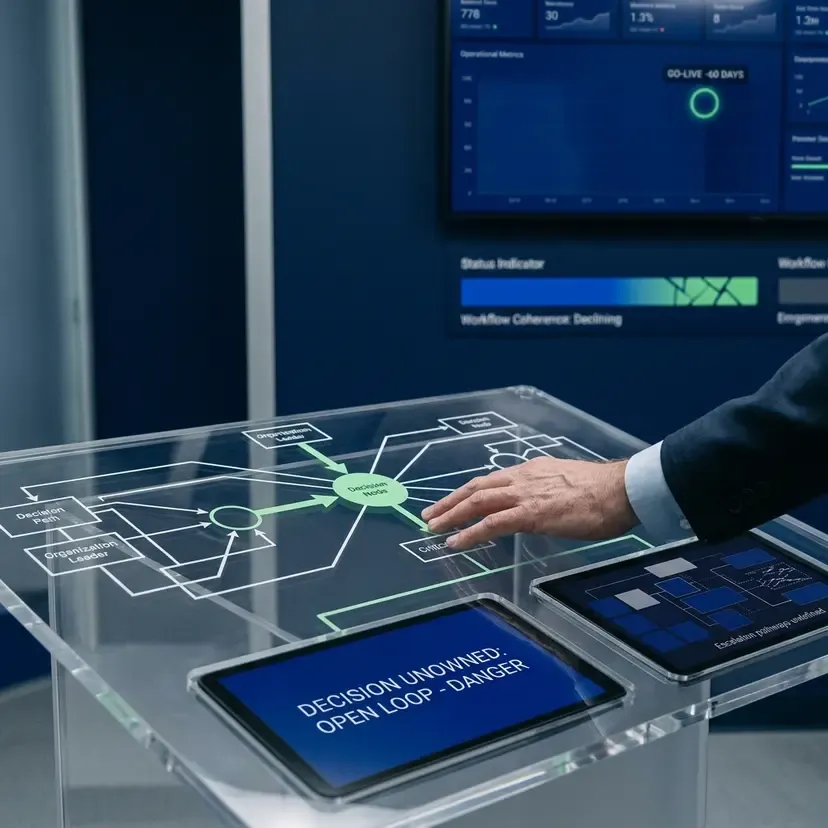
Decision Spine is the pathway through which the organization turns a question, risk, or trade-off into a clear decision. It defines who has authority, who contributes expertise, what must be escalated, how quickly a response is expected, and how the decision returns to the people doing the work.
When this control is weak, teams create parallel paths, reopen decisions, seek informal approvals, or wait for a meeting where no one can resolve the issue. Strengthen it by naming decision rights for recurring transformation issues, documenting escalation thresholds, and requiring a named owner, due date, and clear return message.
2. Execution Cadence: create a dependable rhythm
Execution Cadence is the operating rhythm that keeps leaders reviewing conditions, making decisions, checking follow-through, and learning from what happened. It is the difference between an occasional update meeting and a reliable discipline for moving unresolved work toward resolution.
The rhythm must match the conditions. During an acute go-live or recovery period, leadership may need a daily command rhythm and weekly executive review. During normal operations, a monthly review may be sufficient. The test is whether the cadence keeps action, ownership, and learning close enough to the work to prevent drift.
3. Visibility Layer: make the operating picture usable
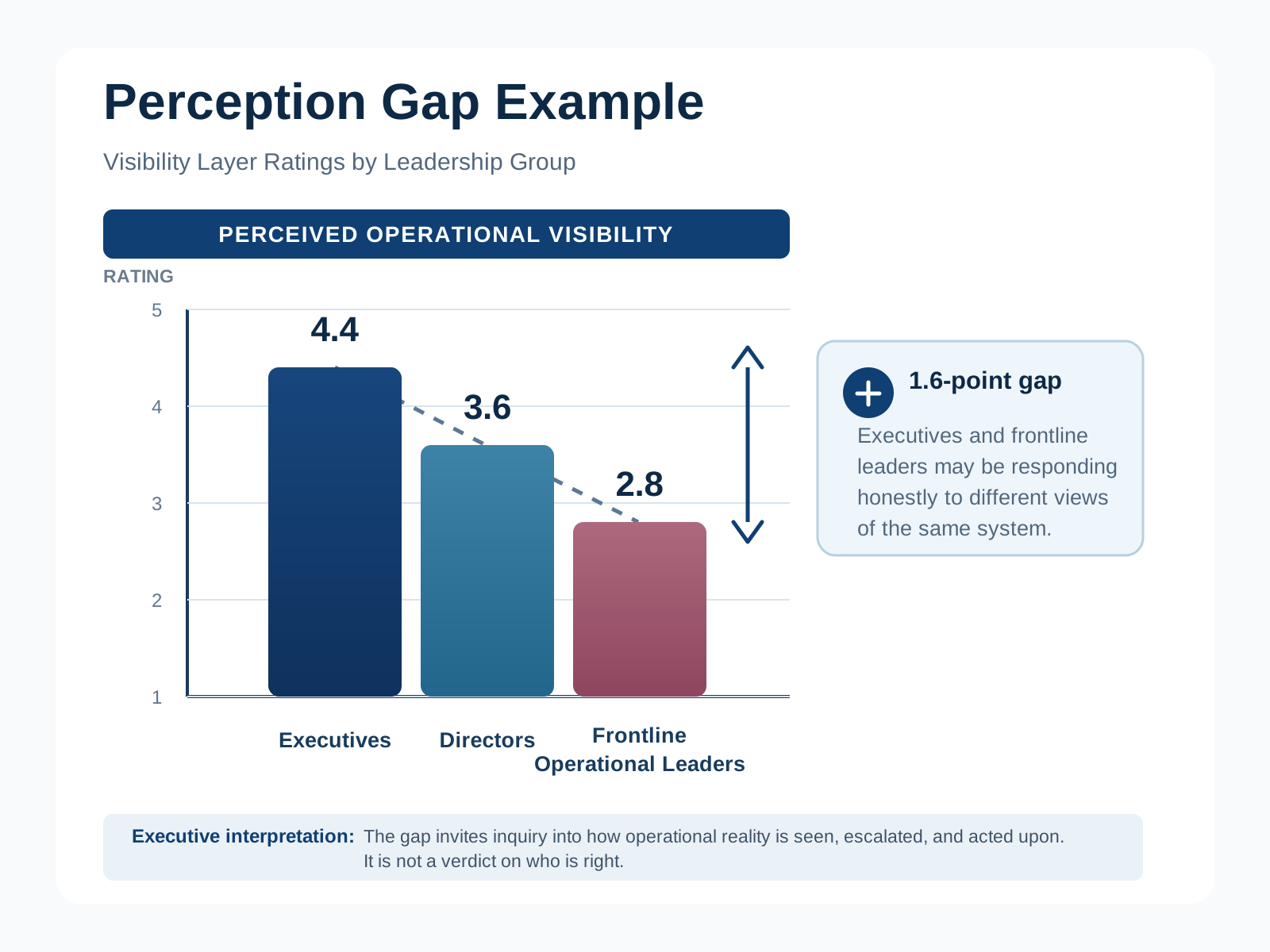
Visibility Layer is the quality of the information leaders can use inside that rhythm. It is not data availability alone. The signals must be timely, credible, appropriately segmented, connected to the work, and paired with an owner who can act.
A visible metric with no decision pathway is still just a report. A usable operating view lets leaders answer: what changed, what remains unresolved, what is becoming riskier, what needs a decision, and what evidence will show whether the response helped.
4. Friction Radar: surface strain before it hardens
Friction Radar is the organization’s ability to detect where work is becoming harder, slower, less safe, or more burdensome before those conditions are normalized. Signals may include repeat escalations, rework, delayed documentation, missed handoffs, rising after-hours effort, manual tracking, or the same concern returning through multiple channels.
A practical friction radar does not require exhaustive surveillance. It needs a few trusted signal sources, a predictable place to review them, and permission for people close to the work to name what they are seeing before they can prove the entire case.
5. Command Core: direct the enterprise response
Command Core is not simply a better executive meeting. It is the authority and operating discipline required to direct the enterprise response when conditions are elevated. It establishes priorities, resolves competing demands, allocates constrained resources, and makes interdependent decisions across clinical, operational, and technical functions.
A capable command core does more than review the work. It determines what must happen next, assigns authority, reconciles trade-offs that cannot be solved within one function, and keeps coordinated execution intact as new information arrives. Without that authority, a command center can become a forum for reporting rather than a mechanism for directing the response.
6. Leader System: sustain the disciplines that make the controls work
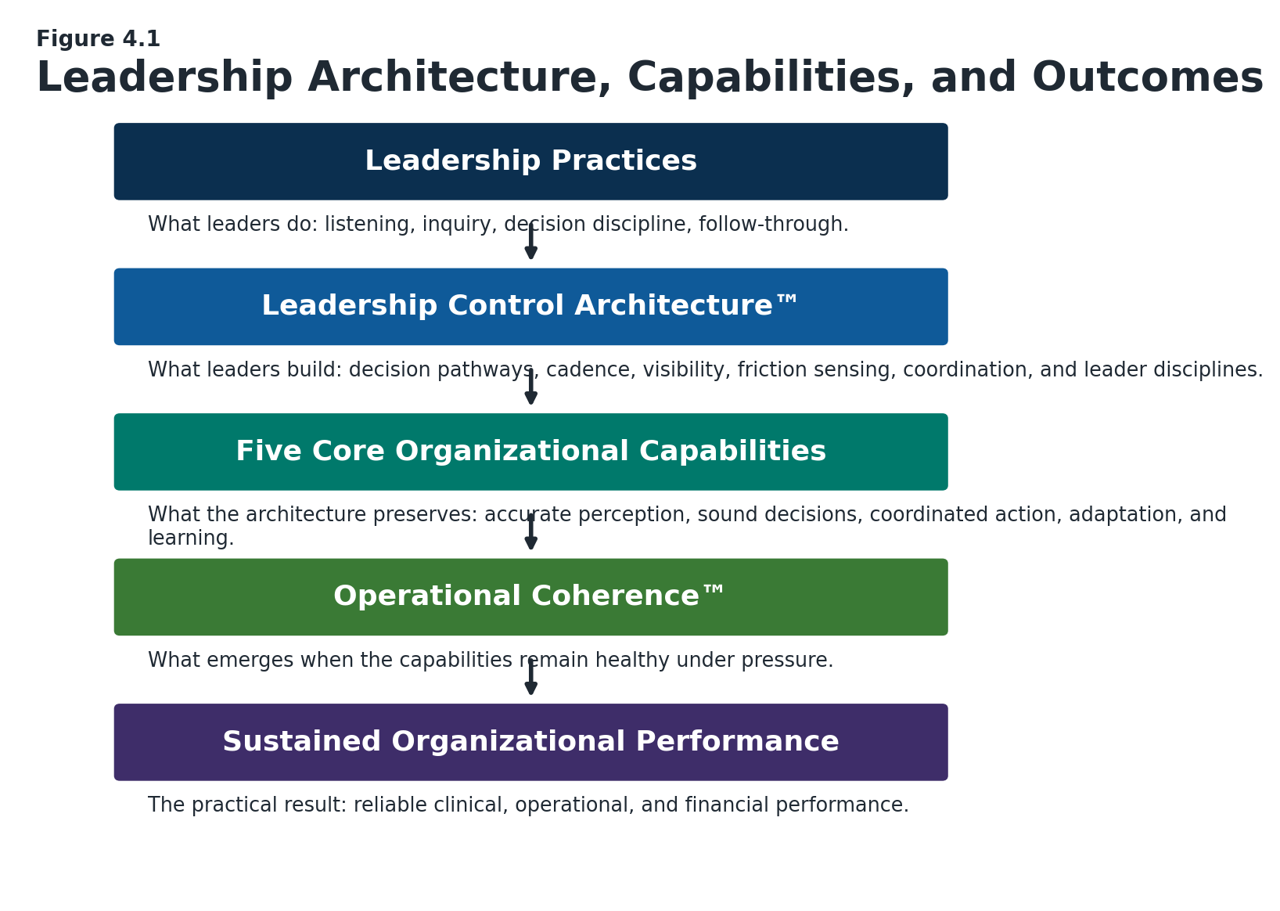
Leader System is the set of disciplines and behaviors through which leaders sustain the other five controls. It includes operational listening, inquiry and constructive challenge, an appropriate response to escalation, visible follow-through, decision discipline, learning and reflection, and accountability that does not suppress truth.
Leadership capacity matters within this system, but it is only one part. Long hours, constant context switching, manual tracking, and emotional labor may preserve performance briefly while weakening leaders’ ability to listen, challenge, decide, and learn. The aim is not merely to protect leaders from workload; it is to preserve the leadership behaviors that allow the enterprise to adapt.
Use the six control points to choose one next move
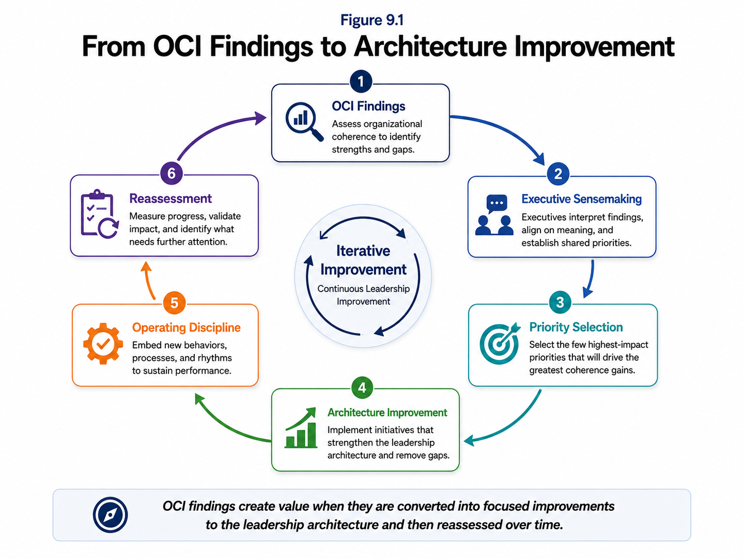
Start with a real operating challenge rather than an abstract score: an aging decision, a persistent escalation, a difficult workflow adoption problem, uneven recovery after go-live, or a clinical area carrying hidden workload. Then ask which control point best explains the strain. Do not try to repair all six at once.
Set one or two observable operating effects. A decision-rights clarification should reduce decision age or repeat escalation. A redesigned review rhythm should improve follow-through. A new friction signal should reveal problems earlier. A command-core intervention should resolve competing priorities before they fragment execution. Review the evidence daily or weekly during elevated pressure and at a slower monthly rhythm only when conditions are stable.
The framework is working when leaders can see reality more clearly, coordinate across functions, make and communicate decisions with less avoidable effort, learn from what changes, and sustain adaptive performance without relying on heroics.
Sources and Related Evidence
The research grounding behind the framework.
The six control points are Stability Edge’s integrative framework. The sources below inform related healthcare principles—clear roles, team leadership, situation monitoring, mutual support, and coherent measurement—but do not independently validate the six-control-point architecture as a complete model.
- AHRQ’s TeamSTEPPS leadership guidance — on roles, responsibilities, plans, resource allocation, feedback, and adapting as conditions change.
- AHRQ’s TeamSTEPPS situation-monitoring guidance — on active scanning, shared situational awareness, and shared mental models.
- AHRQ’s TeamSTEPPS overview — on communication, leadership, situation monitoring, and mutual support as mutually reinforcing teamwork skills.
- IHI’s Whole System Measures guidance — on coherent, parsimonious measurement for health-system leadership and strategy.
How Stability Edge Helps
Map one active operating challenge across the six control points.
In an executive briefing, Stability Edge helps your team map one active operational challenge across the six control points and identify where leadership architecture may be contributing to the strain.
Explore the Six-Control-Point OCI AssessmentTalk with MarkGet a Free 30-Minute Assessment CallFrequently Asked Questions
Questions leaders ask about this topic
Do all six control points need to be strong before a go-live?
No organization is perfect before a major change. The aim is to understand which control points are most exposed, clarify compensating practices, and avoid entering a high-pressure period with unexamined weaknesses in critical areas.
Which control point should leaders address first?
Start with the point that best explains the current pattern of strain. A focused diagnosis of decision age, visibility, escalation, coordination, and leadership experience is more useful than a generic improvement program.
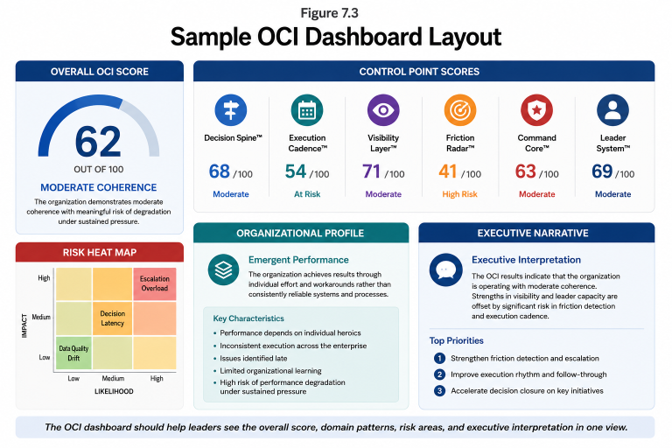
Can the six control points be measured?
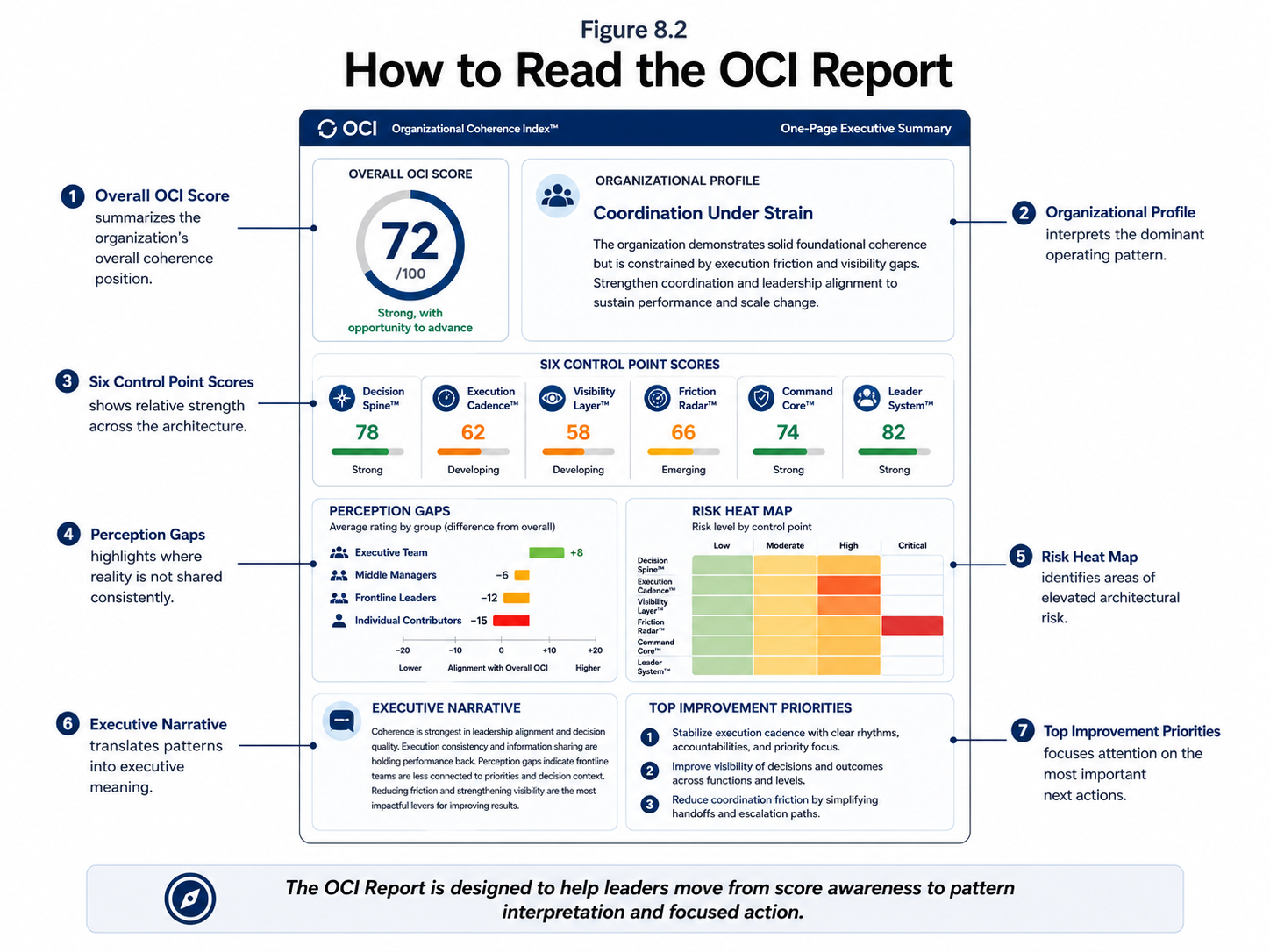
Yes. OCI captures leaders’ experience of the control points, and it can be paired with local operational, workload, and recovery measures to create a more complete view of how the system is behaving.